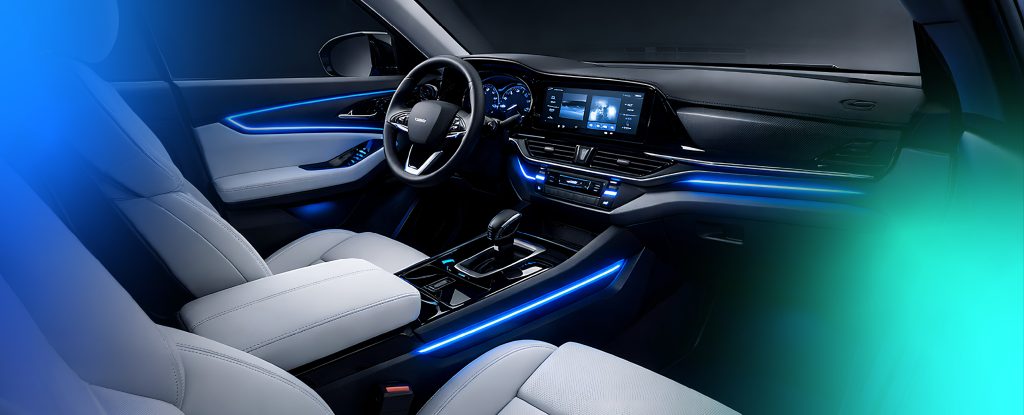
Ambient lighting has evolved into a signature element of modern automotive interiors. It no longer serves merely as functional illumination — it defines brand character, enhances perceived quality, and creates an emotional connection between the vehicle and its occupants.
From subtle contour lighting along door trims to dynamic RGB themes integrated into dashboards and consoles, ambient lighting contributes significantly to user experience. However, evaluating its visual impact during the early concept phase can be challenging, especially when detailed lightguide geometries, LED specifications, and packaging constraints are not yet finalized.
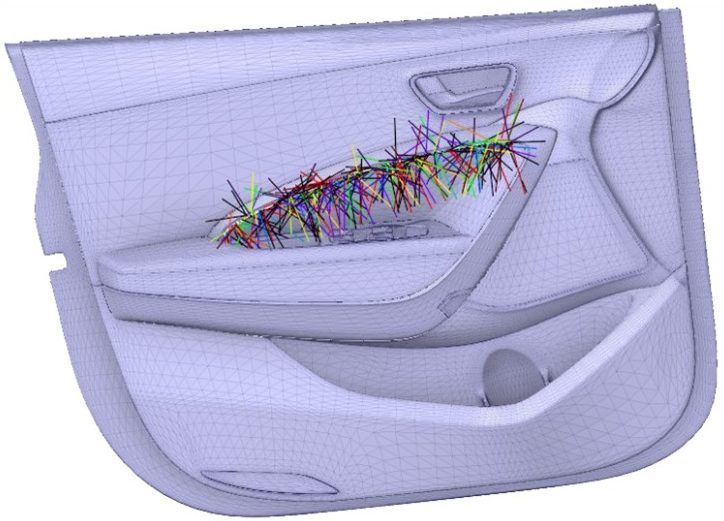
This is where Ansys Speos plays a critical role. It enables automotive OEMs and suppliers to virtually design, simulate, and assess interior ambient lighting concepts with high physical accuracy — long before physical prototypes are built.
During the concept and styling phase, lighting requirements are fluid and often undergo multiple iterations. Designers seek rapid answers to key aesthetic and functional questions, such as:
Without virtual validation tools, these questions are often answered through time-consuming physical mockups. Late-stage discovery of issues such as non-uniform illumination, glare, or inconsistent color rendering can lead to costly design modifications.
By integrating optical simulation early, teams can align styling intent with engineering feasibility, reducing risk and accelerating development cycles.
Ansys Speos provides a dedicated optical simulation environment tailored for automotive lighting applications. It allows engineers to create realistic interior lighting models without requiring finalized hardware definitions.
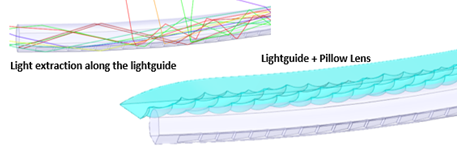
By defining precise optical material properties, engineers can simulate how light propagates, diffuses, and reflects within the cabin. This ensures realistic prediction of brightness distribution, color consistency, and surface interaction.
Speos allows designers to define ambient light sources directly on surfaces such as:
Using spectral source definitions, teams can evaluate broadband white lighting as well as RGB-based dynamic lighting scenarios — even before final LED selection.
This flexibility supports rapid styling exploration. Designers can iterate between multiple lighting themes, color transitions, and intensity levels without redesigning physical components.
Interior lighting is ultimately judged by human perception. Speos bridges the gap between photometric data and visual experience through:
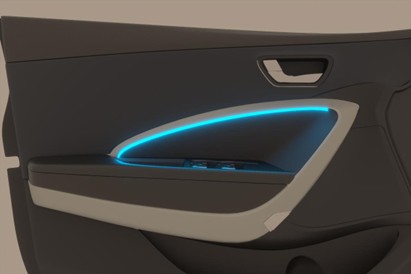
Engineers can simulate how lighting appears from the driver’s eye position or from rear-seat occupants, evaluating comfort, glare, and overall ambiance. This human-centric validation ensures that design decisions are based not only on intensity values but also on how the lighting feels inside the cabin.
After simulation, Speos offers advanced post-processing tools specifically suited for automotive applications:
These capabilities allow teams to assess uniformity, contrast, color blending, and potential visual discomfort. Moreover, the physically accurate renderings serve as powerful communication tools for cross-functional reviews and stakeholder presentations.
Integrating Ansys Speos into early design workflows provides measurable advantages:
By shifting lighting validation upstream, organizations can achieve better quality outcomes with lower development risk.
Ambient lighting is a defining feature of contemporary vehicle interiors, influencing aesthetics, comfort, and brand differentiation. Early-stage evaluation is essential to ensure that design vision translates seamlessly into production reality.
Ansys Speos provides a comprehensive virtual platform to create materials, define spectral light sources, simulate perception through human vision models, and visualize results with physical accuracy. This enables automotive teams to explore, validate, and refine interior ambient lighting concepts well before final design freeze.
The result is an interior experience that is visually compelling, technically optimized, and aligned with both brand identity and occupant comfort.