Optical Aberration Series Coma Aberration: Understanding Off-Axis Blur in Optical Systems

Coma Aberration Correction

Introduction: Why Optical Aberrations Matter

In real optical systems, image quality is often limited not by diffraction alone but by optical aberrations arising from lens geometry, alignment, and field dependence.
Among third-order Seidel aberrations, coma aberration plays a crucial role in degrading off-axis image quality, producing comet-shaped blur patterns that are especially noticeable in imaging, astronomy, and automotive vision systems.

Modern optical design tools such as Ansys Zemax OpticStudio allow engineers to quantify, visualize, and perform efficient coma aberration correction during the design stage —reducing costly physical iterations.

This blog explains:

What is Coma Aberration?

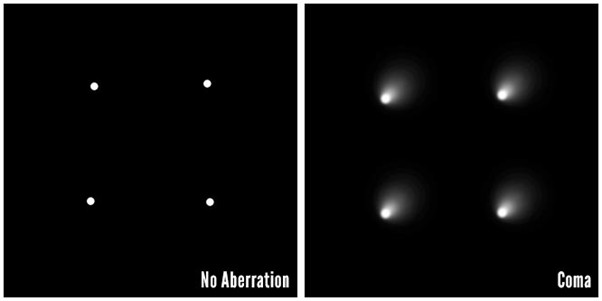
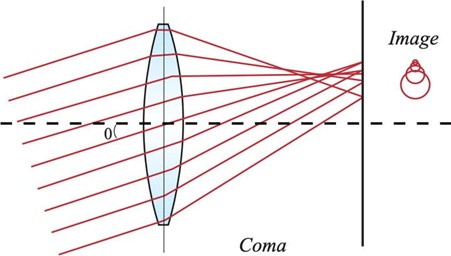
Coma is an aberration affecting off-axis object points, where rays passing through different zones of a lens fail to converge at a single image point.

Coma Aberration Correction

Pic Credits: Edmund Optics

Instead of a sharp spot, the image appears:
This distortion reduces spatial resolution, contrast, and measurement accuracy in imaging systems.

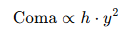
Physical Origin of Coma

Coma arises primarily due to:
where:

Visualizing Coma Using Ansys Zemax OpticStudio

One of the strongest advantages of Zemax is its ability to directly visualize aberrations through multiple analysis tools.

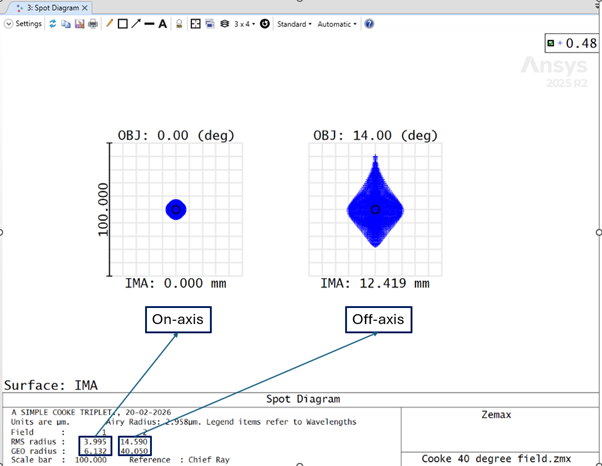
1. Spot Diagram Analysis

In Zemax:
Coma Aberration Correction
This provides immediate confirmation of coma presence.

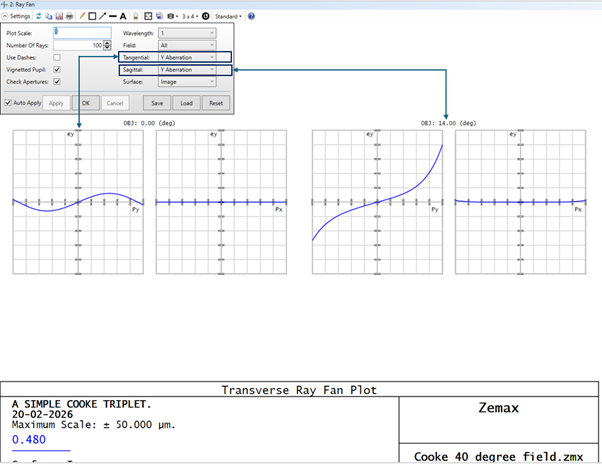
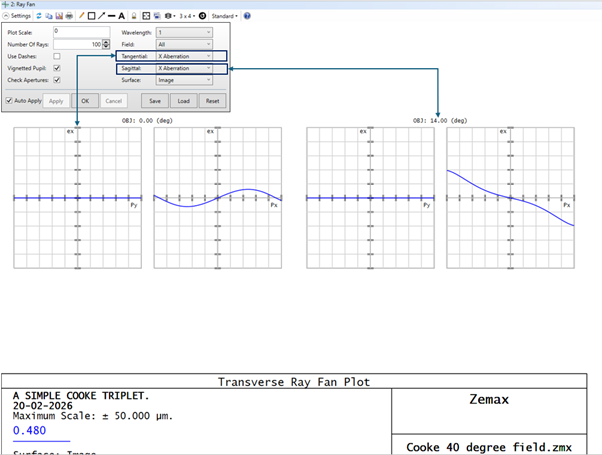
2. Ray Fan Plot

The tangential and sagittal ray fans in Zemax reveal:
Coma Aberration Correction

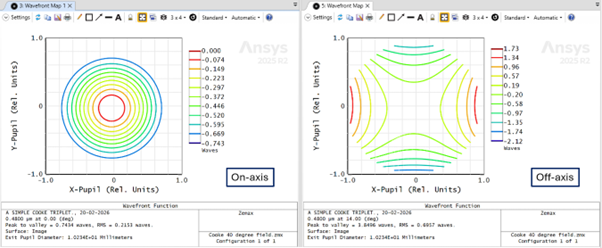
3. Wavefront Map & Zernike Terms

Zemax expresses coma via Zernike polynomial coefficients:
Coma Aberration Correction
Monitoring these values during optimization enables quantitative coma reduction.

Impact of Coma in Real Applications

Astronomy & Telescopes

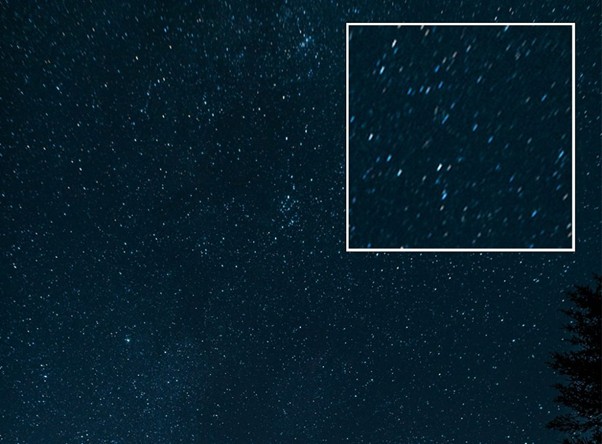
Stars near the edge of the field appear stretched into comets, reducing observation clarity.
Coma Aberration Correction

Notice the “stretched” comet like stars;

Automotive Camera Optics

Edge-field blur degrades:

Machine Vision

Measurement errors increase due to asymmetric point spread.
Coma Aberration Correction
Hence, coma control is critical in wide-field imaging design.

Zemax-Driven Strategies for Coma Aberration Correction

1. Stop Position Optimization

Zemax allows rapid evaluation of:

Proper stop placement can significantly suppress coma.

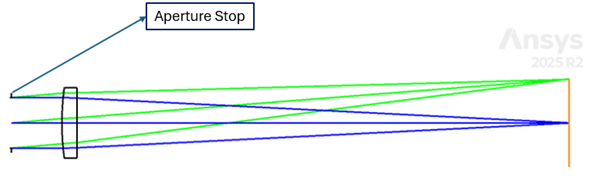
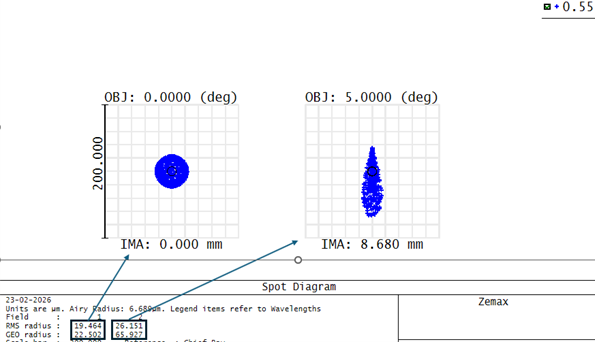
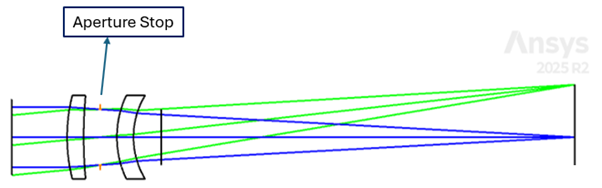
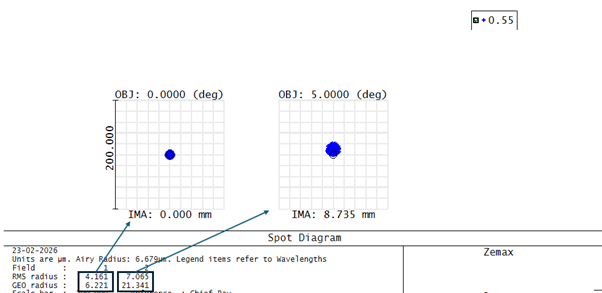
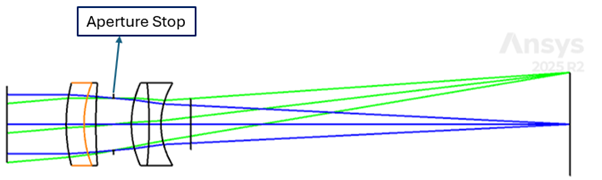
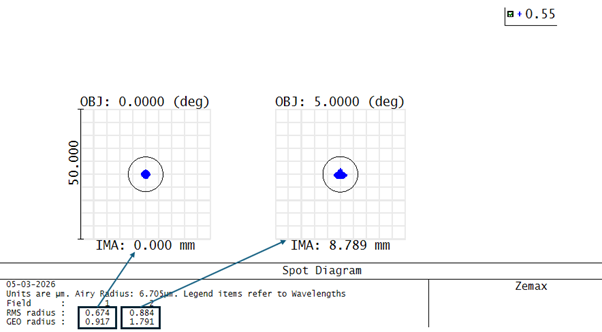
Refer below example wherein a plano convex lens’s performance is evaluated with aperture stop being on left side of the lens & with aperture stop being on right side:

Coma Aberration Correction

Aperture stop on left side of the lens & its spot performance

Coma Aberration Correction

OS 1

Coma Aberration Correction

OS 2

Observe the geo radius values for off-axis field spot, you can see that spot size as well as coma spread is less of OS 2 optical system compared to OS 1 despite having the same configurations & start design, OS 2’s lens curvatures were optimized a bit more.

This is one of the most effective classical corrections.

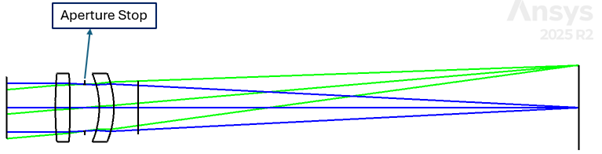
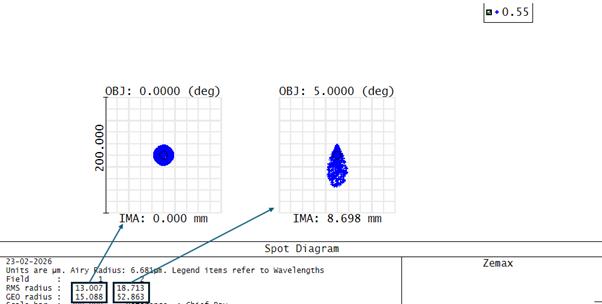
3. Doublet based Optical Systems

Refer below example:
Coma Aberration Correction

OS 3

Compared to OS 2 system, OS 3 system is way better performing in terms of spot & coma spread. Also, the primary coma aberration (in waves) is quiet a low value. This tells us that a doublet lens pair is far superior to a singlet lens pair for coma correction.

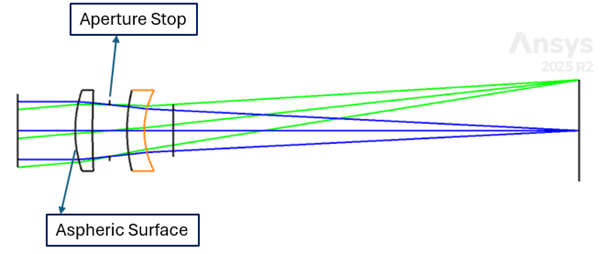
4. Aspheric Surface Introduction

Refer the below example:
Coma Aberration Correction

OS 4

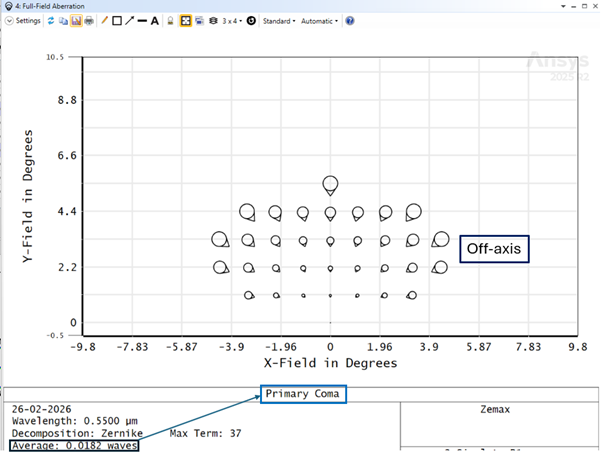
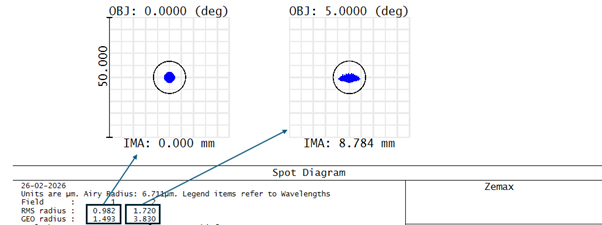
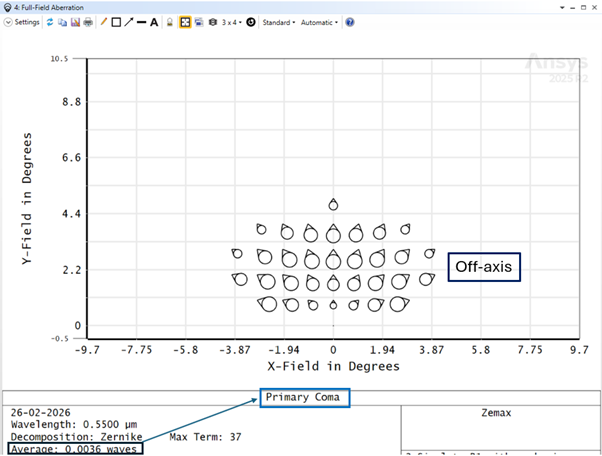
OS 2 & OS 4 are same configuration optical system, but OS 4’s performance in terms spot & coma spread is far less than the OS 2’s performance.
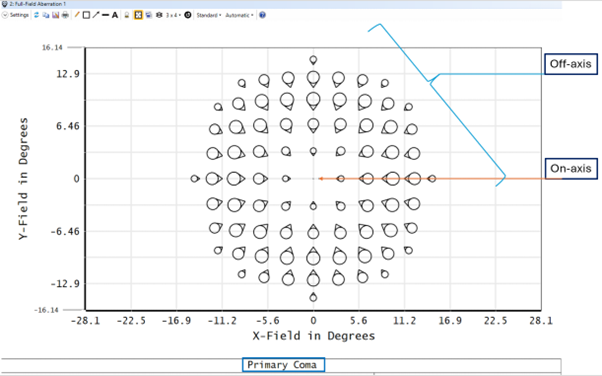
Further if we look at the primary coma using full field aberration plot, it indicates that OS 4 system has less coma aberration (in waves) compared to OS 2
Coma Aberration Correction

OS 2

Coma Aberration Correction

OS 4

Why Zemax is Essential for Coma Analysis

Without simulation, coma correction requires trial-and-error prototyping.

Conclusion

Coma aberration is one of the most important factors affecting off-axis image quality in wide-field optical systems. Its presence can significantly degrade resolution and introduce distortions that impact applications ranging from astronomy to machine vision and automotive sensing.

Through advanced optical design software such as Ansys Zemax OpticStudio, engineers can perform detailed optical aberration analysis, identify the sources of coma, and implement systematic coma aberration correction strategies.
Mastering these techniques allows optical designers to achieve high image quality across the entire field of view while reducing development time and minimizing the need for physical prototyping.