A camera system integrates optical, mechanical, and electronic components to capture and process images. The camera housing provides mechanical stability and precise alignment for internal parts, ensuring that light is properly directed toward the image sensor. Within this assembly, the optical subsystem, primarily composed of lenses, plays a central role in focusing and transmitting light to form a clear image.
The lens assembly is the most critical element in determining image quality. It governs how light is refracted and transmitted, and its performance depends on the accuracy of surface geometry and material integrity. Even minor imperfections can disturb light propagation through the optical path. During manufacturing, handling, or extended use, lenses may develop cracks or bids (small surface chips, bubbles, or raised defects). These flaws scatter or reflect light irregularly, causing refraction errors, diffraction patterns, and localized aberrations.
Such defects can lead to image degradation, including reduced sharpness, loss of contrast, stray light, and radiometric inaccuracies. In high-precision systems—like infrared cameras or scientific instruments—these effects can compromise calibration and measurement reliability.
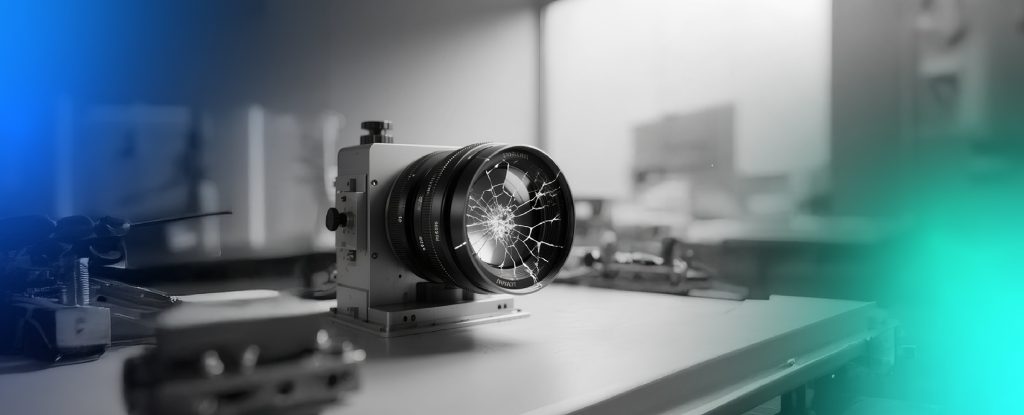
Fig. 1 Camera lens with cracks
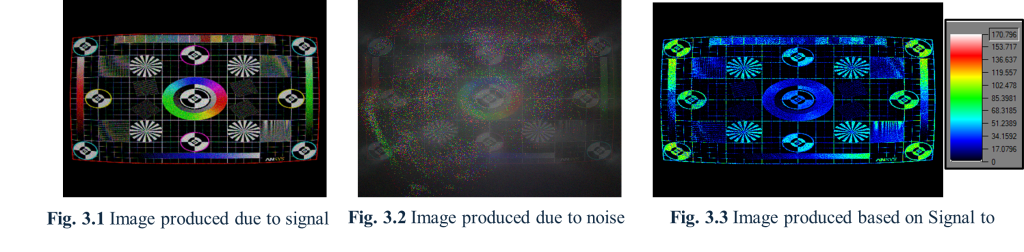
SPEOS tools allows users to check light path, signal-to-noise ratio (SNR), and visualize optical defects.
b. Image result of a physical camera, whose lens stack has a crack of width- 0.1mm:
The visualization helps you pinpoint regions most affected by cracks and quantify their impact.
This study demonstrates that even micro-cracks (0.01 mm) on lenses can significantly degrade optical performance by introducing noise, reducing contrast, and causing stray light.
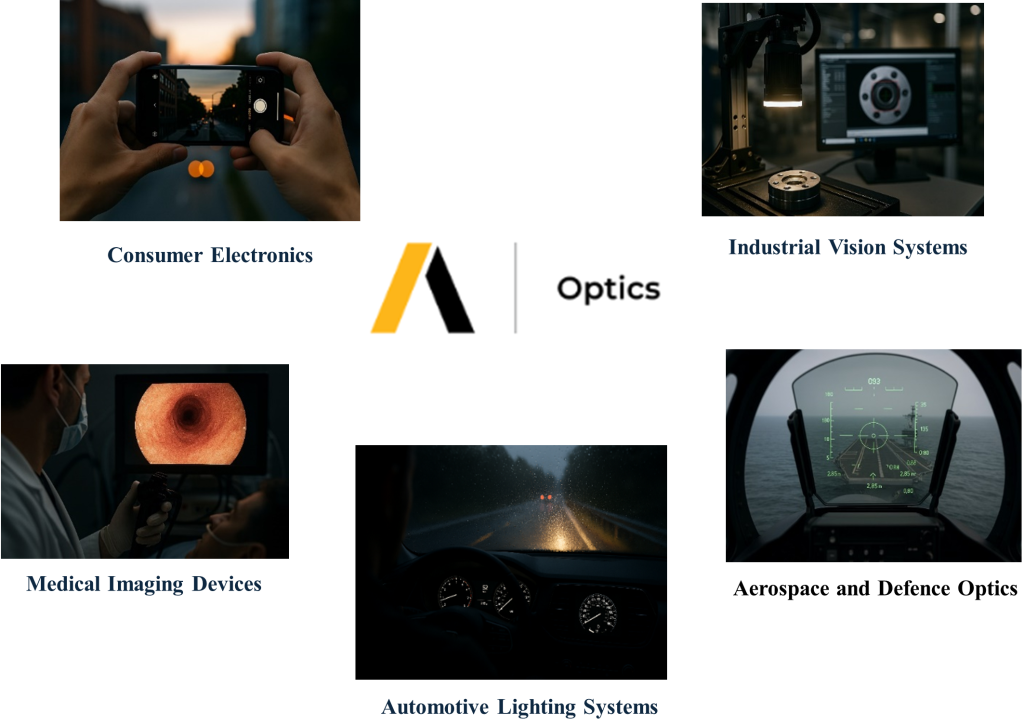
Crack analysis is not limited to camera lenses; it is vital across industries where optical performance is critical—automotive, aerospace, medical imaging, consumer electronics, and industrial vision systems. ANSYS SPEOS provides a comprehensive platform to virtually
Fig. 7 Areas where Ansys Speos can be used.
model, simulate, and analyse these defects, enabling engineers to predict real-world optical behaviour, optimize designs, and reduce costly physical prototyping. By integrating physics-based light propagation and material interaction models, SPEOS ensures reliability and performance in high-precision optical systems.