CADFEM BLOGS

EXPLORE EXPERT INSIGHTS, INDUSTRY TRENDS AND INNOVATIVE SOLUTIONS THROUGH OUR LATEST BLOGS.

Related Blogs

In the world of oil and gas, wastewater treatment, and chemical processing, the Gravity Separator is a cornerstone of phase separation. However, designing these vessels for maximum efficiency—minimizing "carry-over" and "carry-under"—requires more than just empirical formulas. As a CFD professional, leveraging Ansys Fluent allows you to peek inside the vessel, identifying dead zones, short-circuiting, and interface instabilities that physical testing simply cannot reveal. Here is how to master the high-fidelity simulation of these systems.
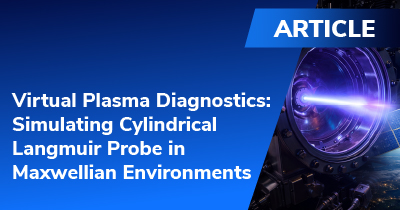
Plasma, often referred to as the fourth state of matter, distinct from the solid, liquid, and gaseous states is estimated to make up about 99% of the visible universe. Plasma is a collection of positively charged ions, negatively charged electrons, and neutral particles exhibiting collective behaviour and forming an overall electrically neutral system. In space, the dominant plasma formation mechanism is photoionization, in which high-energy solar radiation ionizes neutral atoms and molecules. The ionosphere, lightning, and fire represent classic natural plasma phenomena on Earth. Heating a gas to very high temperatures in the laboratory can ionize it and create a plasma. Plasmas play a critical role in semiconductor fabrication, enabling processes such as PECVD and etching. The primary challenge in plasma-based industries, particularly in semiconductor manufacturing, is achieving process repeatability and uniformity at nanoscale dimensions. This challenge is addressed by measuring key plasma parameters, with plasma diagnostic tools playing a central role in enabling accurate parameter measurement and ensuring industrial process repeatability.

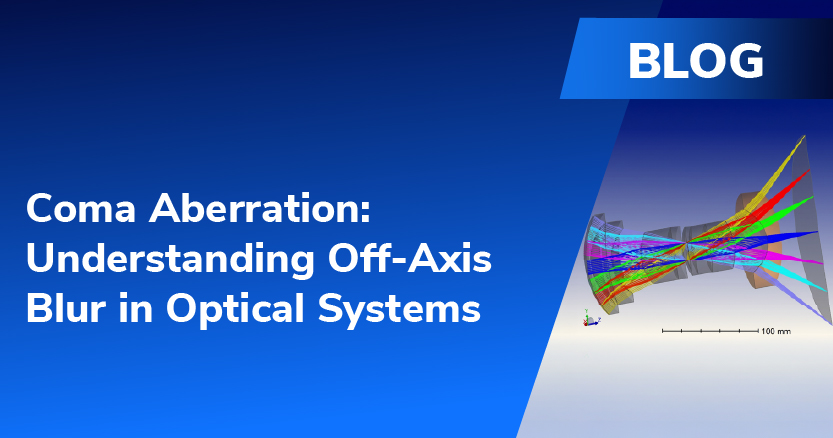
In real optical systems, image quality is often limited not by diffraction alone but by optical aberrations arising from lens geometry, alignment, and field dependence.
Modern electronic systems rarely operate within a single physical domain. A high-speed processor, a 5G antenna array, an electric vehicle inverter, or a satellite payload must simultaneously satisfy electromagnetic performance, thermal reliability, and structural integrity requirements.
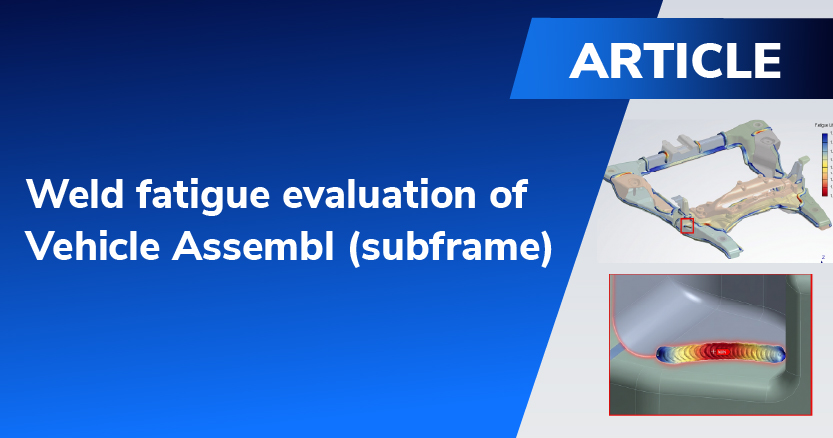
Vehicle structures are constantly subjected to repeated loading from road conditions, braking, acceleration, and vibration.
Ceiling fan airflow simulation
In Part 1 of this blog series, we explored how simulation using Ansys Fluent enables accurate airflow prediction and IS 374-compliant performance assessment for ceiling fans —
lightning effects on aircraft
Military aircrafts are struck by lightning on average 10.5 strikes with an estimated occurrence every 10,000 flying hours in Europe. While lightning strikes are common, aircraft are designed with extensive lightning strike protection to safely
A camera system integrates optical, mechanical, and electronic components to capture and process images.
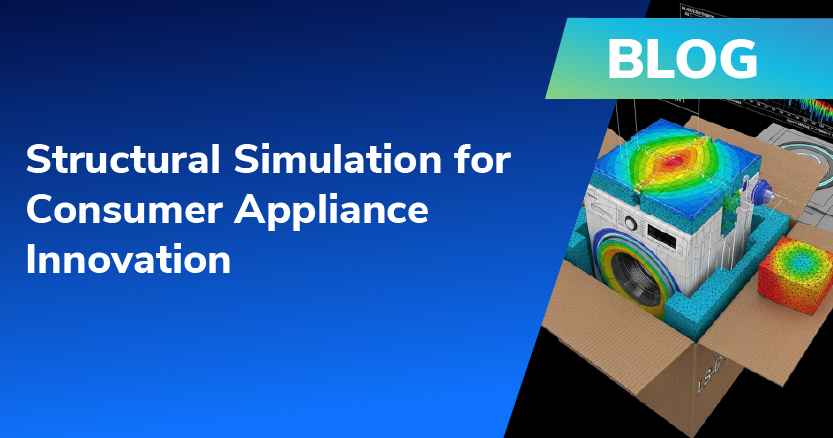
Every year, millions of appliances—refrigerators, washing machines, televisions, air coolers, and more—travel thousands of kilometers through complex supply chains.
Structural Simulation
Ever wondered why your washing machine doesn’t shake itself across the room, how a refrigerator door survives years of opening and closing, or why a dishwasher frame remains perfectly sealed under high-temperature cycles?