
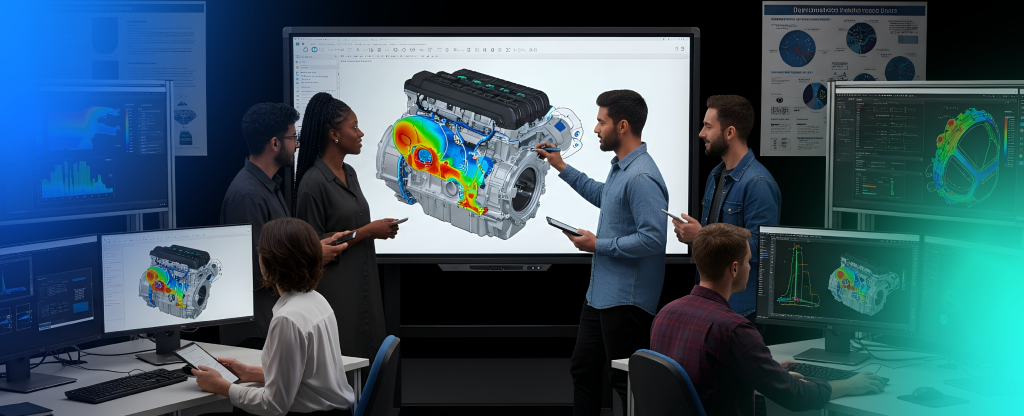
Bridging the skill gap in engineering is one of the most pressing challenges facing academia and industry today. While students graduate with strong theoretical foundations, many lack the practical experience needed to contribute effectively in real-world scenarios. This is where engineering simulation steps in. By allowing students to design and evaluate systems digitally using the same tools that industry engineers rely on, simulation turns academic learning into hands-on engineering experience.
Across India, engineering classrooms are full — yet employers still struggle to find graduates who can seamlessly contribute to real-world design, analysis, or product development. The disconnect is not about capability. It is about exposure. Most students learn the physics, but very few learn how that physics behaves inside a real turbine blade, a heat exchanger, a PCB stack, or a biomedical device.
Simulation transforms engineering education in three pivotal ways:
Using simulation tools, students can change design parameters (material, shape, boundary conditions) and immediately see results. This kind of iterative “what-if” learning is far more effective than textbook-only teaching.
When students use Ansys software in classrooms, they apply underlying physics (fluid dynamics, heat transfer, structural mechanics, electromagnetics) in realistic contexts. For instance, the Ansys Academic programme emphasises that “the demand for graduates with engineering simulation skills is exploding.
When students work with Ansys Academic simulation tools, something powerful happens where equations become behaviours, and theory becomes decision-making. Consider three common academic domains:
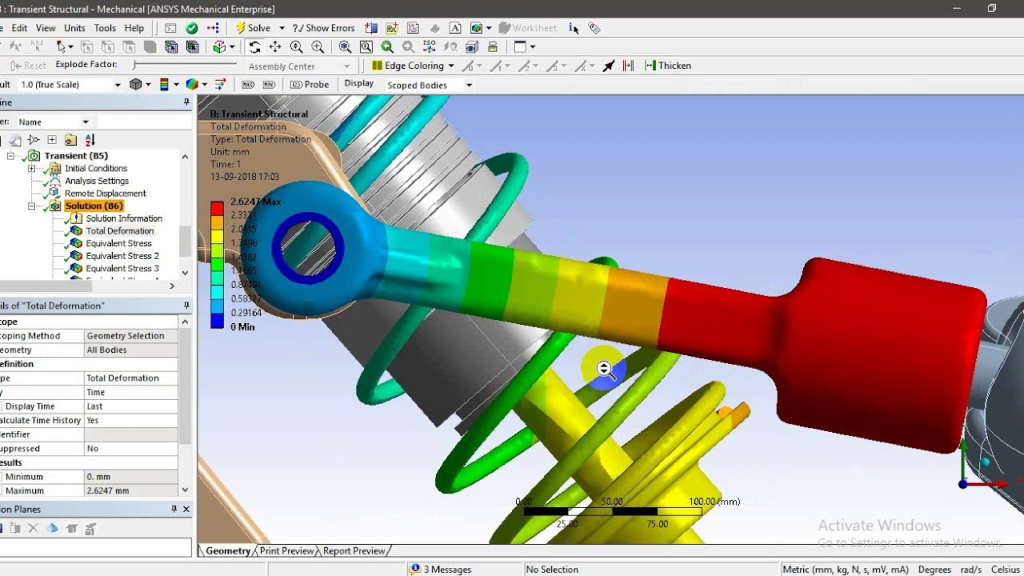
Today’s engineering systems span multiple physics: electronic components generate heat, structural casings must dissipate it, mechanical loads may impact electronics, and vibration may influence thermal behaviour. With simulation:
|
Academic Requirement
|
Simulation Strategy
|
|---|---|
|
Conceptual clarity
|
Link theory classes with simulation-based demonstrations
|
|
Practical exposure
|
Introduce simulation labs & guided assignments
|
|
Industry readiness
|
Use project-based learning with real case problems
|
|
Employability
|
Encourage students to build simulation portfolios
|
Bridging the skill gap in engineering starts with transforming how students learn. Simulation empowers them to apply theory in real-world contexts, making them confident, industry-ready professionals. It’s not just a teaching tool—it’s a gateway to innovation.
Simulation is not just a teaching aid — it is a professional language spoken across engineering industries today. When students learn using simulation, they don’t just understand engineering problems; they learn how to solve them.
|
|
|
|---|---|
|
Explore Simulation
Elevate your research with simulation. Connect with CADFEM Academics today. |
|