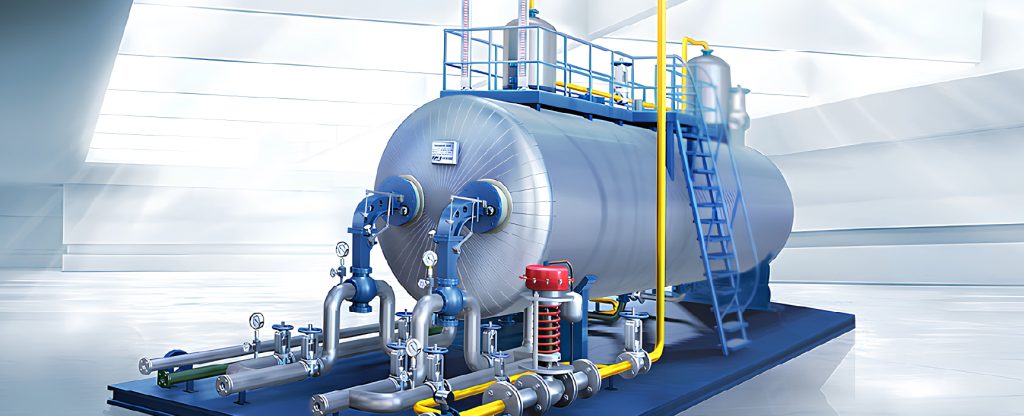
In the world of oil and gas, wastewater treatment, and chemical processing, the Gravity Separator is a cornerstone of phase separation. However, designing these vessels for maximum efficiency—minimizing “carry-over” and “carry-under”—requires more than just empirical formulas.
As a CFD professional, leveraging Ansys Fluent allows you to peek inside the vessel, identifying dead zones, short-circuiting, and interface instabilities that physical testing simply cannot reveal. Here is how to master the high-fidelity simulation of these systems.
The success of your simulation hinges on selecting the correct multiphase model. For a standard 3-phase (Gas-Oil-Water) separator, the Volume of Fluid (VOF) model is the industry standard.
One of the greatest challenges in separator modeling is the scale of the vessel. A separator might be 20 meters long, but the interface you need to resolve is only millimeters thick. Using a uniform fine mesh is computationally wasteful.
Mesh Adaptation (AMR) is the solution. By setting up Gradient-Based Adaptation on the Volume Fraction, Fluent automatically refines the grid only where the phases meet.
To ensure your simulation mirrors real-world physics, pay close attention to these three “make-or-break” settings:
A. Operating Density
In the Operating Conditions panel, always set the Operating Density to the density of the lightest phase (Gas). This minimizes hydrostatic pressure round-off errors, which is vital for the stability of the pressure-based solver in large-scale tanks.
B. Surface Tension and Wall Adhesion
Even in large vessels, surface tension stabilizes the interface. Ensure the Continuum Surface Force (CSF) model is active. If your separator has specialized coalescing plates, include Wall Adhesion angles to correctly model how droplets “bead” or “spread” on internal surfaces.
C. Boundary Conditions & Initialization
Video: Separation Process
A successful CFD report shouldn’t just show colorful contours; it should provide actionable engineering data. Focus your analysis on:
Video: Volume fraction of water in operation
Modeling gravity separators using Ansys Fluent transforms design from assumption-driven to insight-driven. By combining VOF-based multiphase modeling with adaptive mesh refinement and precise setup strategies, engineers can accurately predict separation efficiency, reduce design iterations, and optimize performance early in the development cycle.
The real advantage lies not just in visualization, but in making confident engineering decisions that improve reliability, efficiency, and overall process outcomes.